Search

Queer Rock Love

A Family Memoir

Tag

family

Funerals and Freakshows

Philip Koonce II, beloved husband, father and coach, passed away on Tuesday, January 29, 2013. He was born on October 16, 1926, in Shreveport, Louisiana to Dr. Philip B. Koonce, Sr. and Mabel Koonce. Philip is survived by his children: Philip Koonce, III and his wife Gail, Blaine Koonce and his wife Lynn, and Katy Koonce and her wife Paige; his grandchildren: Cody, Bryan, Brent, Haley, Andrea, Jenna, Stephanie, Dylan, and Waylon; and seven great-grandchildren.

I pulled up to Daddy Phil’s house just before the viewing. The family was already at the funeral home, but the garage door had been left open to reveal rows of folding chairs and card tables bedecked with vinyl tablecloths.

The kitchen table was loaded with kolaches. I knew that food would continue to roll in.
Food would continue to roll in throughout the evening.

Inside the house, the kitchen counter was crowded with boxes of kolaches. I knew that food would continue to roll in throughout the evening and the next day. Friends and family would appear in an intricately choreographed dance, unloading ice and coolers, cookies and casseroles, sodas and red Solo cups.

***

Growing up in Carthage, Texas, Philip dreamt of becoming a famous country singer like Tex Ritter (another Carthage native son). His mother, the indomitable Mabel Koonce, wrote to Ritter for advice. The country music legend responded with a long letter that said, essentially, “It’s a hard life. Go to college. Explore your options.”

Daddy Phil in the Philippines.
Daddy Phil in the Philippines, his football helmet behind him.

In 1944, Philip enrolled at the University of Texas. He played football and (at Mabel’s insistence) interned for a state senator. Drafted at the end of the war and stationed in the Philippines, Philip found an unusual niche. At 19, he was recruited to coach and quarterback a football team for the Air Core. He also helped organize entertainment for the USO. In a letter, he told Mabel that it was “the kind of a job I’ve always wanted and I’m going to give it everything I’ve got.”

After the war, Philip attended the University of Houston. He walked on to the football team and eventually won a scholarship. He met his future wife, earned a master’s degree in education, got married, and moved to Texas City to begin his career as a high school football coach.

***
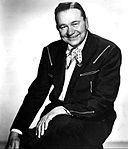
The Koonces are a musical people. Daddy Phil dreamt of being a singer like Tex Ritter.
The Koonces have always been musical people. Daddy Phil dreamt of being a country singer like Tex Ritter.

The Koonces are a musical people. Katy’s mother, Donna, wrote volumes of rhyming verse. Her couplets could be simultaneously sappy, pointed and inspired. She might wax poetic about a mother’s love, but she was equally likely compose an epic guilt trip.

Katy’s oldest brother, Phil III, has been known to rhyme as well. His ode to Father’s Day, “A Few Things I Remember About Dad,” hung on the wall above the old man’s bed.

As lead singer for Butch County, Katy growls her rhymes. They’re less sentimental, more sexual, filled with fictional characters and intricate rhetorical acrobatics.

Katy’s middle brother, Blaine, is the kind of musician who can play anything with strings. He’s been in all kinds of bands, from bluegrass to gospel, but his real genius is improvising songs for any occasion, which he delivers in a charismatic comic deadpan.

Despite his reserved demeanor, Daddy Phil had a beautiful voice, which he shared in rare performances at anniversaries and family gatherings.

***

On the evening of his funeral, friends gathered around the card tables in the garage. They came to eat and talk, to comfort and commiserate, but mostly to listen and to sing.

Blaine played everything from "Let It Be" to "Up Against the Wall Redneck Mother."
Blaine played everything from “Let It Be” to “Up Against the Wall Redneck Mother.”

Sandra and April brought a cooler full of ice.

Pammie brought pasta.

Leigh Ann and Redonda brought King Ranch casserole.

Dede brought paper products, including extra t.p.

Someone brought shrimp slaw and made sweet tea.

Someone else wrote it all down on a yellow legal pad in the kitchen.

Blaine held court with his guitar. As the night wore on, he and his friend Victor played everything from “Let It Be” to “Up Against the Wall Redneck Mother.” The mourners overflowed into the driveway and coalesced around the beer coolers. In the darkness, the  warm yellow light of the garage was like amniotic fluid, enveloping and protecting the dearly beloved. I put my arm around my queer-as-shit wife and sang along about “kicking hippies’ asses and raising hell.”

***

I had hoped to see Katy’s nephew, Bryan Koonce, hip-hop impresario and aspiring MC. After Katy’s mom’s funeral, he had delivered a manic, virtuosic description of what it was like to smoke salvia. I was curious what more I might learn.

I found him inside the house with his two sisters, Andrea and Jenna. They were sitting on the family room couch, texting, seemingly separate from the rest of the party.

“Do you remember me?” I asked, plopping down on the rocking chair. “I’m Paige, Katy’s wife.”

“Yeah, I remember you,” Bryan answered, friendly but distracted by his phone. All three siblings have young kids, and all three live together at their mom’s house. His sister said something under her breath. They seemed to be sparring in real time and via text simultaneously.

“We’re kind of the Jerry Springer side of the family,” Bryan said, bashfully.

I gazed at the family photos on the opposite wall. If they had captions, they’d read like a rolodex of reality show plots: “Addiction Killed My Mama,” “The Brother I Never Knew I Had,” “My Daughter Looks Like a Man.”

“Which side isn’t the Jerry Springer side?” I asked, sweeping my arm around the room and including myself.

“True,” he laughed. I’m not sure if he registered the irony that I, the unlawfully wedded wife of the prodigal daughter, was awkwardly trying to reassure the first-born son of the first-born son.

***

In 1969, Philip moved to Lake Jackson, Texas, to work with at Brazoswood High School. For 16 years, Koonce served as Assistant Head Football Coach and Defensive Coordinator, helping to guide the Brazoswood Buccaneers to eight district titles and to the state championship in 1974. Former players remember him as stern and disciplined yet compassionate, an introvert with a sense of humor and a talent for storytelling.

I did not grow up in a close-knit community. I never learned to anticipate the needs of grieving neighbors, nor did I know the spiritual comfort that these small gestures give.

However

I have been honored to write obituaries for both of Katy’s parents, and I have rarely felt so purposeful, rarely known such a fit between the task at hand and my humble tools.

I can’t spin rhymes, can’t keep a tune, but I’m lucky to cast my lot with people who know how to sing and to grieve.

Postscript:

As I was writing this, I found an apropos video by Bryan Koonce. Sample some Koonce family rhymes:

And the soul that I have will lay next to Dodie

Sippin’ on some scotch and listenin’ to oldies

Credits: Kolache photo by Chmee2; Tex Ritter photo from Capitol Records (public domain). All other photos courtesy of Koonce family.

Donor Duet, II

Before Waylon was born, I believed that my future child would not watch much television. On the rare occasions when he did watch television, I imagined, he would choose something that I liked – something witty and subversive like PeeWee’s Playhouse.

Apparently there’s a karmic debt to be paid for such hubris, because my son did turn out to like television, quite a bit. At age four, his favorite show was Thomas and Friends, a neo-Victorian boy’s tale about anthropomorphic steam engines who compete to be “a really useful engine” in the eyes of a pig-eyed industrialist called Sir Topham Hatt.

“Mom, can I watch just one more Thomas?” Waylon asked, his face a caricature of exaggerated yearning. We had spent the morning jumping waves and building sand castles and flying kites on the beach. We were exhausted and a little bit sunburned. We’d had a late lunch and a shower, I’d removed most of the sand from Waylon’s hair, and now we were lounging on the worn couch of our rented beach house, waiting for Katy and Brian to return from band practice.

“OK,” I said, cuddling him closer. “You can watch one more episode. But you have to turn it off when Uncle Brian gets back.”

Two days earlier, when Brian and his wife Kathy arrived at our house in Austin, Waylon had dutifully dispensed hugs and kisses before retreating to the safety of his toys. Today was our first full day at the beach, and Waylon was still a little shy around the newcomers.

I remembered what it was like to meet some relative whom your parents always talked about. You felt pressure to produce fond feelings, to fall in love with this new person. But it was awkward, even stifling, because the relationship was pre-defined. I was thinking about how to help Waylon feel comfortable (and succumbing to a familiar Thomas and Friends stupor) when I heard the sound of boots on the outside stairs. Katy came in first, walked over, kissed us both, and sat on the couch. Brian entered next, nodded in our general direction, and headed to the fridge for a beer.

Over the past 24 hours, Brian had become increasingly edgy and withdrawn. Today’s practice was the first of only three full rehearsals for the show. Some of the band members hadn’t touched their instruments for almost 20 years. From the look on Brian’s face, I guessed things hadn’t gone so well.

He brought his beer into the living room and sat across from us, looking pale beneath his five o’ clock shadow. He looked like a different man from the rocker in Katy’s old photos. His long, bleached hair was now short and dark. He wore cargo shorts and a baggy T-shirt. It was hard to believe that he’d once pranced around the stage in eyeliner and a jockstrap. Right now he looked like he’d prefer to crawl under a blanket and never come out.

“Waylon,” I said, “it’s time to turn off Thomas.” I was afraid that the minor dramas of the station house would push Brian over the edge.

For once, Waylon turned off the TV without complaining. While Katy and I chatted about band practice, he dragged Master the robot from behind the couch and began to play in Brian’s vicinity. I could see Waylon looking at this new grown-up from the corner of his eye. I guessed that he wanted to engage, but he wasn’t quite sure how to begin. He flipped Master’s switch on and off, over and over again.

“I-am-Master. I-sense-your-fear.”

“I-am-Master. I-sense-your-fear.”

“I-am…”

“Wait,” Brian said, coming out of his reverie, “What is he saying?”

Waylon repeated it for him slowly, “He says ‘I sense your fear.'”

“No,” Brian said, deadpan. “No.” Waylon looked confused, almost heartbroken.

“No,” Brian explained, “He says, ‘I-am-Master. I’ll-buy-you-a-beer.'”

Waylon cracked up. Apparently this was one of the funniest things he’d ever heard. He couldn’t stop repeating it, talking over Master’s mechanical voice, forcing the robot to buy endless rounds of cheer for everyone in the living room.

Read Part III here.

Donor Duet, III

Surfside Beach is connected to the mainland by a string of chemical plants. Vast plantations of pipes and cooling towers squat over the shallow waters of the bay. At night, illuminated by security lights, the plants were strangely beautiful. In the daytime, they made me think of cancer and three-headed fish.

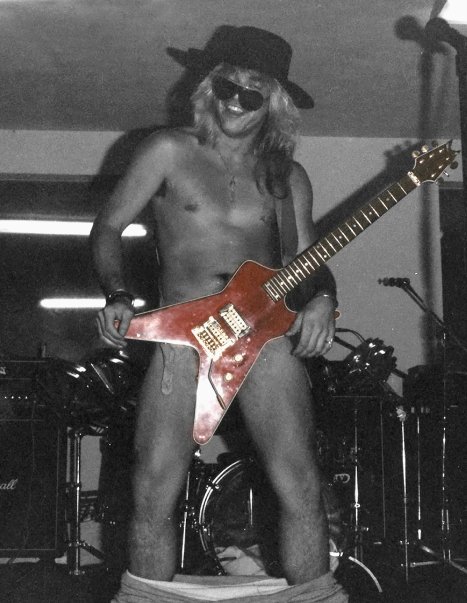
We were traversing this no-man’s-land because Katy had a mission. She had found an old picture of Brian onstage, naked except for a cigarette, a fedora, and a strategically placed guitar. We were driving to the Brazosport Mall to get it transferred onto t-shirts for the show.

“I want a shirt too,” Waylon said from the back. “I want a shirt with Uncle Brian on it.”

“Hmm,” I said. “I’m not sure that would be appropriate.”

“Oh, what the hell,” Katy protested. “He wants a t-shirt of his donor.”

“Well, you can’t wear it to school,” I said, weakly. What the hell. It was a hilarious picture.

We were just coming over the bridge to the mainland, and Katy pulled over at a store called Buc-cee’s, which was a combination convenience store, surf shop, and t-shirt emporium. They sold diesel fuel, bikinis, flip flops, and blow-up rafts, along with hamburgers, chicken wings, chewing tobacco, beer, and homemade fig preserves.

Waylon was immediately drawn to a large display of sand pails and shovels. Katy headed for the children’s clothes and started flipping through the racks for a size 4 black t-shirt. I decided to try on floppy sun hats. If you can’t beat the consumers, I figured, you might as well get something good.

“Mommy, Mommy, can I have this?”

Waylon was dragging an enormous plastic ship through the racks of bathing suits and trunks. When it was clear that he was addressing Katy as “Mommy,” everyone in the store, from the teenage girl in the bikini aisle to the trucker waiting for his food order, did a double take. I couldn’t tell if Katy noticed.

“Sure,” she said automatically. “Check out this t-shirt.” She held up a black t-shirt with an anchor on the sleeve that said “Surfside Beach.” It matched the tattoos on her arms.

“Yes!” Waylon exclaimed. They high-fived.

The line at the cash register was long. One vacationing family was buying snacks for a day on Surfside. But mostly it was chemical plant workers, grabbing coffee and donuts before reporting to shifts at Dow and Shintech. Katy scooped up Waylon and held him while we waited. “My boy,” she said, kissing his head. “My boy is going to get a shirt just like Mommy’s.” Waylon nodded enthusiastically.

“If anybody asks you who’s on the back, what do you say?”

Waylon shrugged.

“You say, ‘that’s my Donor!'”

***

That night, after practice, Brian was even more nervous. He sat silently through dinner, answering his wife’s cheerful queries about band practice with terse, one-word answers. Kathy’s daughter, Jessica, was visiting from college, and I felt bad, because Brian’s nerves were casting a pall over their mother-daughter time.

“We could build a bonfire on the beach tonight?” Kathy asked, hopefully. Brian shrugged and stared at his food. The silence was awkward, unbearable. All of the women, myself included, immediately began to fill it with airy small talk. But when Brian left the room, Kathy scraped his plate with barely contained fury, her lips pressed together in a thin line. After the dishes were done, she wiped the formica table in sharp, precise circles.

I hovered between helping and not helping. The whole scene was like a rerun of the family gatherings of my early adolescence. I knew the script by heart: men set the mood, women set the table…and cook, and clean up. As a teenager, I’d vowed to resist my assigned role in this drama. Now, stuck in the beach house, I felt angsty and oddly irritated with Katy. I didn’t sign on for this much heterosexuality! Why are you making me sit through this? I wanted to hold my hands over Waylon’s eyes. Don’t watch!

My angst was tempered by a guilty sense of sympathy. I guessed Kathy wasn’t used to seeing her husband this nervous. They had met long after he retired from Rokitt. In her world, Brian was a caseworker for people with developmental disabilities. I had seen him with some of his clients when we visited Michigan. He was relaxed, patient, sweet.

After dinner, Brian retired to the back porch to smoke. Everyone else gathered in the living room. It was clear that no bonfire was going to materialize.

“Mom, can I watch one more Thomas?” Waylon asked.

I felt ambivalent. I knew he was bored, but I didn’t want to be rude, hogging the TV with kiddie shows.

“Ask Uncle Brian if he wants to use the TV,” I answered. Just then, Brian walked in the door and started to cross the room. Waylon followed him across the linoleum floor.

“Can I watch TV?” he asked, tugging on Brian’s shorts.

“I don’t know,” Brian said, sullenly. His whole body recoiled from the responsibility that the question implied. “Ask your mom.”

***

The next day, Waylon and I escaped to the beach to jump waves. Every few minutes he yelled, “This is so fun!” as if he couldn’t quite believe his luck. I felt the same way. As a child, I would stay in the surf for so long that my body could feel the rise and fall of the waves in my bed at night. Now Waylon’s excitement was making me feel like we shared a special bond.

When he got winded, I held him on my hip and jumped for him. Waylon told me stories about preschool. I told him stories about childhood vacations. We talked until I ran out of stories, but he still wasn’t ready to go ashore.

“Are you excited for the big rock show tonight?” I asked.

“Uh-huh.” He shook his head. We’d been taking him to shows since he was a month old.

“Are you going to dance for Uncle Brian?” I asked.

“Yes, and I’m going to sing with the band. On the stage.” he informed me.

“Oh.” This was the first time I’d heard of this plan. I didn’t want to smash his dreams, but I also didn’t want him to be disappointed if it didn’t work out.

“Um, Sweetie, Mommy is singing with the band. Did anyone tell you that you were going to sing with the band?”

“No,” he said serenely. “I just am.”

Read Part IV here.

Donor Duet

Originally published on The Bilerico Project in May 2011.

Two days before our sperm donor was due to arrive in Texas, my wife walked in the door with a bulging sack of secondhand toys.

“Waylon already has too many toys,” I said, shaking my head. “His birthday was a month ago! He’s barely four and he has enough stuff to fill two closets.”

“I know, I know,” she replied, looking sheepish. “But he’s going to be the only kid at the beach this weekend.”

This is one of our most familiar family dynamics: Katy indulges, Paige worries, Waylon gets the loot. But for once I wasn’t worried about my son’s consumer character. I was more concerned about my wife’s impulse to play Santa in July.

On the surface, her justification for the new toys was entirely plausible. We were about to embark on the kind of trip down memory lane that only the middle-aged can appreciate. Katy’s best friend Brian, Waylon’s sperm donor, was coming to Texas to play a reunion show with Rokitt, his hair metal band from the ’80s. But rather than the gritty Texas blues clubs that they played in their prime, this time Rokitt was planning to electrify their die-hard fans from the fluorescently-lit comfort of the Stahlman Park Recreation Center on Surfside, a tiny island south of Galveston.

Surfside Beach is not exactly the Riviera of the Texas coast. But Waylon wasn’t exactly a beach snob. He played in the sand all day long at his preschool, digging holes and tunnels and rivers. Every night at bath time, he reluctantly parted from a personal reserve of sand. Despite Katy’s worries, there could be no doubt that he was looking forward to a vacation that involved beaches full of unlimited sand.

When it came to the ocean, however, Waylon’s expectations were as murky as the waters off the Texas coast. We had taken him to the Gulf of Mexico a few times before, but it wasn’t clear that he remembered. When I asked if he was looking forward to playing in the waves at Surfside, Waylon remained vague. “Uh huuuuuh,” he murmured, looking off into the middle distance.

It was pretty much the same situation when I asked if Waylon was looking forward to seeing “Uncle” Brian. They had only met once, when Waylon was about 18 months old, and I knew Waylon didn’t remember. Brian called him at Christmas and birthday time, and Waylon communicated with the harassed politeness that children everywhere extend to long-distance relatives.

With the Rokitt reunion on the horizon, Katy had been pulling out old pictures and trying to enlist Waylon’s enthusiasm for the band and its sperm donor front man.

“Waylon,” she said, holding out a picture from an amateur photo shoot circa 1987, “Do you know who this is?”

Waylon looked up from his blocks, scanned the picture of a man in a ripped tank top and lace tights, and shook his head.

“That’s Uncle Brian!” Katy explained, in a sing-song Barney voice. “Remember, he gave us the seed that we needed to make you?”

This line about the seed was what we’d been telling Waylon ever since he was old enough for us to tell him something about the way we made him. I worried at times that it was too euphemistic, but it was technically accurate. Thus far, although Waylon loved to hear stories about how his parents met and decided to have a baby, he hadn’t expressed interest in the mechanics of conception. From what I could tell, it hadn’t yet crossed his radar that his moms couldn’t make a baby on their own. Whatever we were saying about seeds just seemed extraneous.

Regardless of what Waylon understood, Katy’s enthusiasm for her best friend and his erstwhile band was hard to resist. Over the last few days, Waylon had begun to recognize the guy in the pictures and to look forward to seeing Rokitt play. I was getting excited, too. But I was also scared.

Brian wasn’t part of our queer milieu of chosen family. He had a wife, an ex-wife, and a son in high school. The few times that we’d met, I hadn’t been able to decipher his dudely, understated manners. From my vantage point, it wasn’t clear if Brian was really down for new and complicated family ties. I worried that this vacation would prepare Waylon to expect a relationship that would never materialize.

When I wasn’t fretting about too little connection, I worried about too much connection. I imagined Waylon, fifteen and leather-jacketed, leaving home in a storm of adolescent angst. “You just don’t understand me,” he yelled as the backdoor slammed shut. “I’m going to live with my Dad.” Dad. Dad. Dad. In fantasy, the forbidden D-word lingered in the air as Katy and I huddled in the kitchen, broken apron strings dangling limply at our sides. What if Waylon and Brian had some kind of mystical masculine bond? What if Waylon decided to abandon his moms? Could Brian love and support our son without trying to supplant us? Was Katy secretly worried about this, too? Was that the real explanation for her toy store shopping spree?

All of these questions were swirling in my mind when Waylon came home from preschool and gravitated to the big bag of toys. Katy told him he could pick one now and save the rest for the beach, so he closed his eyes and plunged his hand into the bag, feeling around until he located the largest toy: a three-foot plastic robot with a helmet and a ray gun. (Apparently, my feminist, nonviolent shopping criteria were the first casualty of Brian’s visit.) Waylon was in heaven. Grinning, he searched for the “on” switch. And then there was sound:

“I-am-Master,” the robot announced. “I-sense-your-fear.”

Read Part II here.

Photo by Steve Keys is covered by a Creative Commons licence. Some rights reserved.

That Damn Family Unit

Family-Tree-Poster---Englis.JPGIt’s that time of year again. For Texas families with elementary-aged kids, back to school season means the obligatory curriculum on families.

My son, Waylon, is in third grade, so we’ve been around this thorny mulberry bush a few times before. But this year the path took a new turn.

“Mom,” Waylon asked, “how come some people don’t have kids?” He was hanging on the back porch door and swaying in and out of the house in a fidgety eight-year-old kind of way.

I was in the middle of draining a boiling pot of noodles into a colander, but I still wanted to provide a wide-ranging answer. It came out something like this: “Maybe-they-don’t-want-to-or-they don’t-have-the-money-or-the-support-or-the-interest. Maybe-their-pet-is-their-baby-or-their-work-or-their-art…or something else.”

“But what about carrying on the generations?” Waylon asked.

Perpetuating the ancestral line is not something we discuss much in our donor-inseminated domestic domain. As far as I am concerned, my family’s dominant genetic traits are early baldness, alcoholism, and a propensity for moles. If the Schilt line had stopped with me, the chief mourners would be rich dermatologists.

It didn’t take me long to surmise that Waylon’s preoccupation with generation was a by-product of the classroom curriculum on families.

As a teacher, I can understand why a unit on families makes sense at the beginning of the school year. Getting students to talk about their backgrounds creates opportunities to examine similarities and differences. Direct talk about differences (and similarities across differences) is one of the best ways to dispel stereotypes and create real community in a diverse setting.

A unit on families is also a way to encourage students to connect to their cultural heritage. The other day, in the middle of a play date, Waylon’s friend Jimmy solemnly asked me if I would like to hear his cultures. He listed them on his fingers:

“Hopi, Cherokee, German, Polish, Canary Islander, Spanish…oh, what’s that one, oh, oh, um…French…”

All in all, Jimmy reported eight different “bloods.” Waylon was extremely disappointed that we did not have a similarly compelling list for him. He refused to be mollified by the fact that his great great grandfather was a polygamist with two wives, because Canadian Mormonism could not be distilled into a specific bloodline.

I was happy for Waylon’s buddy because I could tell that their classroom unit on families had given him a sense of confidence and pride. Theoretically, the family curriculum could work the same way for kids from nontraditional families, including kids from LGBT homes.
In reality, however, we live in Texas.

In a state where nontraditional families are decidedly outside the official curriculum, classroom discussions about family structure can be a source of anxiety instead of pride.

jocks.jpgThe beginning of third grade has meant the dawning of a new self-consciousness for Waylon. Last year he told us, “I love being from an odd family.” This year he told us that he wasn’t going to correct kids who assumed that his genderqueer mommy was his dad.

He’s more strategic about how he comes out to other kids now. He prefers to wait until he’s established a level of comfort and trust before he tells them that he has two moms. A few weeks ago, he let us know that he was planning how to break the news to an older kid in his after-school program. When the deed was done, Waylon expressed relief. “He didn’t seem like he wanted to stop being my friend or anything.”

Luckily, Waylon has never experienced anything more malevolent than skepticism (“that’s weird”), or incredulity (“that’s impossible.”) But I suspect that will change as he gets older. And, if the school curriculum continues to feature families at the beginning of the year, I suspect it will continue to be in tension with his desire to come out about his family at his own pace.

(On a side note, if I could ask one thing from traditional families who want to be allies, it would be that you talk with your kids about all kinds of family structures – including single parents, divorced parents, gay parents, trans parents, absent parents and multigenerational families – so that little kids from nontraditional families don’t have to bear the burden of educating their peers.)

At the end of the unit on families, Waylon had to interview family members and write a paragraph about his family heritage. I tried to suggest a few questions, but – as usual – Waylon had his own agenda for inquiry.

“Where did I get my blonde hair?” he asked. It was a logical kind of “where did I come from” question, because neither Katy nor I are natural blondes.

“I think you got your blonde hair from your grandfather,” I replied. “Or maybe from Uncle Brian,” I added, referencing Waylon’s sperm donor. (Waylon has a dazzlingly handsome blonde donor sib.)

“But what about from Mommy’s side? What did I get from my Koonce blood?”
Back to blood again! I was torn between being factually accurate and honoring the spirit of our queer family tree.

“Well, you don’t technically have Koonce blood… but you’re definitely a Koonce!” I hastened to add.

“I know I’m a Koonce,” he retorted, as if I’d just said the most obvious thing in the world. “And I do have Koonce blood in me.”

“Oh really,” I said cautiously, “tell me about that.”

“When you and Mommy kissed, some of her blood got inside you. And then it got inside of me when you made me.”

“Oh,” I said, feeling thoroughly enlightened and instructed.

Third grade is definitely a turning point. I remember it as the year I looked up every single cuss word in the dictionary. The year I learned what “virgin” meant and realized that I wasn’t the smartest kid in my class. It was also the last year I really believed in Santa Claus.

Maybe it’s wrong, but I hope he’ll keep believing in his own magical version of his family “blood” for just a little while longer.

(Poster image from the LGBTQ Parenting Connection. They have a whole host of inclusive alternatives to typical family tree assignments. Check it out.)

How It Feels to Have a Dad

On Wednesdays, I pick Waylon up from school at 2:45. I have fifteen minutes to walk him to the car, feed him a snack, hydrate him, and deliver him to his occupational therapy appointment a mile away. If all goes exactly according to plan, we can just make it.

Last Wednesday, Waylon was in the backseat, munching a bagel. I had my right turn signal on and was waiting for an opening in the late afternoon traffic.

“Sometimes,” he said, apropos of nothing, “I just wish I could kind of, you know, ditch you guys and live with some other family.”

My first reaction was guilt. It’s the clutter, I thought. We’ve finally driven him crazy with all of our books and papers. Now he wants to live in a family with tidy surfaces.

“Well,” I said, grasping for equanimity, “Mommy and I would certainly miss you if you went away.”

“I know,” he said. “It’s just, sometimes I really want to know how it feels to have a dad.”

A car paused to let me in. I waved my thanks and went straight into fix-it mode. “Well, that’s one reason why we wanted you to spend so much time with Adam and Flynn this summer. So you could know what it was like to be around a dad.”

“I want to know what it feels like to have a dad at night,” he insisted.

“You’ve had sleepovers,” I countered. I knew I was grasping at straws. I couldn’t stop myself.

“I just want to know how it feels to have a dad love me like a dad,” Waylon said.

“Oh,” I said. I was chastened by his persistence and clarity. “I can understand that.”

Still searching for solutions, I did a quick mental inventory of Waylon’s grandfathers: (1) 83-year-old retired coach who never leaves the bed. Great for watching football and collecting photos of Waylon on his bureau. (2) Younger, gay grandpa. Affectionate and sweet as long as he’s not distracted with booze and boys. Prone to disappearing on mysterious “business” trips for weeks at a time.

“Waylon,” I said, turning left at a green arrow. “I can really understand how you feel. I used to sometimes wish I had different parents too.”

“You did?” he sounded excited, enlivened.

“Yes,” I said. “I think every kid wants to know how it would feel to have different parents some times.”

“They do?” he was suddenly chipper. “Mom?”

“Yes?”

“You know that part on Harry Potter Wii where Harry has to defeat the troll?”

We pulled into the parking lot of the occupational therapy center. Our journey was over, but I hoped that this conversation was not. I hoped I hadn’t silenced Waylon’s feelings with my knee-jerk problem solving. I wanted to do it all over, to ask Waylon what kind of dad he imagined, to let him know that his yearning was fine and wouldn’t hurt me.

Freud coined the term “family romance” to describe the childhood fantasy that your parents are not your real parents. He hypothesized that such stories are a normal way of dealing with separation and Oedipal jealousy. But a romance is also just a type of story. As a queer family, we’re making up our own story. I hope we can tell it in ways that make room for all kinds of feelings–even if it means we have to go back and tell it again and again.

Uncle Stacey

Sometimes I start thinking I’m an expert. I get to feeling like I’ve got things all figured out. And then, inevitably, parenthood brings me right back down to earth.landino.jpg

Take the time we told our son, Waylon, that his friend Stacey was embarking on a transition.

Waylon has spent much of his life around trans people. His genderqueer mommy had chest surgery when he was 18 months old. We’ve always spoken openly about the surgery and how it helped Mommy feel more comfortable in her body. As a toddler, Waylon developed his own four-coordinate gender system (boy, girl, boygirl, girlboy) to describe the gender diversity that he observed around him.

His experience wasn’t just limited to genderqueer people. Because my wife, Katy, is a therapist and activist in trans communities, Waylon has grown up around all kinds of trans folk. He can explain gender dysphoria and gender confirmation surgery in seven-year-old layman’s terms. He’s been to Gender Spectrum kids camp. He uses “hir” and “ze” as pronouns for God and certain stuffed animals.

So perhaps I can be forgiven for being a bit cavalier when I introduced Stacey’s transition as dinnertime conversation.

Stacey is my sister’s long-time partner. A talented artist with a low-key demeanor and a childlike capacity for silliness, Stacey has always been a favorite with Waylon. When Waylon developed a fondness for new wave music, Stacey made him mix CDs from his extensive music collection. When Waylon lost his first tooth, Stacey made him a stuffed animal shaped like an anthropomorphic incisor. And Stacey taught Waylon to play Plants vs. Zombies, a delightful video game that is only slightly less addictive than crack cocaine. So there was no question that Waylon would be interested when we told him over dinner that we had news about Stacey.

“You know how Stacey’s kind of like a boygirl?” I asked, using Waylon’s term for butches and masculine genderqueer types. He shook his head yes.

“Well,” Katy continued, “he’s realized that he feels all the way like a boy inside. He’s going to start taking medicine and changing his body so that he can make his body match the way he feels inside.”

Waylon paused for a moment. Then his face twisted into a tortured grimace and he began to sob. This wasn’t the phony cry he uses when he wants to be tucked in for the 27th time at night. This wasn’t the medium cry he uses when he’s scraped his knee or stubbed his toe. This was an anguished wail that made me gather him in my arms and hold his head against my cheek.

“I don’t want her to change, I don’t want her to change,” he bleated between sobs that shook us both.

My eyes met Katy’s across the table. She looked as scared and guilty as I felt. What had we done?

We tried to reassure Waylon by telling him that Stacey’s personality was not going to change. “He’ll still play with you,” I said. “He’ll still like stuffed animals and Plants vs. Zombies,” Katy added. “He’ll still be the same person.”

“No,” Waylon cried into my shoulder. “I don’t want her to change.” The tears showed no sign of stopping.

I tried a different tactic. “This is good for Stacey. This will make him happier.”

But every “him” was like fuel on flames. The crying just got louder and harder. Finally, Katy couldn’t stand it anymore. She reached for Waylon, and I transferred him to her arms. “Shhh shh shh,” she whispered as he rocked him. “It’s going to be okay.”

***

In retrospect, our biggest mistake was not realizing what a big shock this would be. As adults, we’d been able to read certain signs. But Waylon wasn’t picking up on the same clues. He wasn’t getting periodic updates from Stacey and my sister. He felt broadsided.

And while it’s true that Waylon has known quite a few trans people, they’ve mostly been post-transition or genderqueer. He’s never accompanied a friend through the journey of transition. He knew, theoretically, about the idea of transition, but he had no idea what to expect from his friend.

I can see, in hindsight, why I failed to anticipate his fears. As a feminist academic and a lover of complexly gendered people, I can be guilty of seeing gender as the most salient factor in almost any situation. From my perspective, Stacey was changing his outward position on a fluid gender spectrum. But Waylon wasn’t crying about gender. He was crying about losing a buddy. If I had it to do over again, I would speak to those feelings of loss and abandonment first and foremost.

***

After that first night, we hovered in an impasse. Waylon’s response to the whole topic was just plain “no.” I was teaching the short film No Dumb Questions in my class that semester, and I asked several times if he wanted to watch it with me. Waylon pointedly declined. I decided to let time work its magic.

At Christmastime, we all met up at my dad’s house. Stacey had sewn Waylon a giant pillow shaped like a fried egg. Waylon didn’t seem hesitant or shy. He followed Stacey around just like usual, talking a mile a minute, his speech liberally peppered with Stacey’s name: “Stacey, guess what? Stacey, look! Hey, Stacey…Stacey, watch this! Stacey!”

Stacey had started T just before Christmas. Now the whole extended family was trying their best to shift pronouns. We all made our share of slips. (Perhaps this is a blatant self-justification, but I swear it’s harder to shift pronouns when someone keeps the same name.) I tried to correct myself right away when I forgot. Occasionally I gently corrected Waylon too. He looked at me doubtfully, said “he,” and then moved on.

After Christmas, I asked Waylon about his experience of spending time with Stacey. He didn’t have much to say, which was unprecedented. Waylon is a chatterbox. He tends to talk nonstop about everything from the arcane plots of video games to the social dynamics of the lunch line. I was a little worried, but it wasn’t like he was avoiding Stacey. He just didn’t really want to talk about the transition yet.

Then, last spring, Stacey and my sis came to Austin for a brief visit. Stacey was recovering from chest surgery, but he and Waylon were still able to make a quick run to the store in search of the small bunny-shaped action figures that they both collect. Afterward, I asked if Stacey seemed different. Waylon thought for a moment. “Well,” he said, “I think maybe he seemed shorter.”

This was progress! Waylon had used a masculine pronoun without coaching. And, apparently, he had turned the corner from seeing Stacey as an average-sized woman to seeing him as a short man.

***

This summer, my sister and Stacey agreed to keep Waylon for a week while Katy and I took our first solo vacation in seven years. We were a bit anxious about being apart from our baby for so many days, but Waylon was pumped about his independent vacation plans. My sweet sis, Waylon’s doting “Auntie,” had planned an action-packed week of theme parks, aquariums, and museums. She and Stacey stocked up on mac-n-cheese. They moved an air mattress into the bedroom of their loft and researched kid movies on cable. They bought sticker books and Sponge Bob snacks.

The night before we left, the four of us had dinner at a restaurant near their house in Chicago. Waylon asked to sit between Auntie and Stacey. As we waited for our food, Waylon and Stacey were amusing themselves with Waylon’s brand new book of Lego stickers. I was talking to my sister when I heard Waylon engaging Stacey in conversation.

“Stacey?”

“Yes?”

“Well…how did your surgery feel? Did it hurt?”

Stacey assured Waylon that the surgery hadn’t hurt too badly because he had been asleep. And then, in the blink of an eye, Waylon’s talk switched back to Legos.

The next morning, Katy and I said our nervous goodbyes and hit the road. In the evening, we called to say goodnight and to tell Waylon that we missed him already. “Mom,” Waylon said, “you and Mommy are my best friends. You and Mommy and Auntie and Stacey are my best friends.”

***

For useful resources about talking to a child about a transition, check out COLAGE’s Kids of Trans resource guide.

Photo credit: Amanda Fulk. You can see a short film and more images of Stacey’s transition at http://www.lamiscelanea.org/ (Enter the site and scroll all the way to the right.)

What I Mean When I Say “Family”

Last month, my hometown of Austin, Texas, had two separate pride celebrations–Austin Pride 2010, organized under the auspices of the Austin Gay and Lesbian Chamber of Commerce, and QueerBomb, a counter procession dedicated to reclaiming pride’s radical, carnal, noncommercial, and transgressive lineage.

qbombhunk.jpgTo this writer, it seemed like the organizers of Austin Pride 2010 were bumbling bullies straight from central casting. Early on, one of the board members publicly queried why “transvestites and bisexuals” couldn’t just stop “pissing on our parade.” Later, they ousted Sandra Bernhard from the roster of official pride events for being “too vulgar.” According to several sources, a local leather group interpreted the march’s rules about “good taste” to mean that they could only participate if they agreed not to wear leather or even vests.

Why, you ask? Why would anyone want to see leather men marching in their business casual attire? Well, the organizers of Austin Pride were quick to answer their critics. They’re doing it for the kids, of course. For the families. To ensure that Austin Pride remains a “family-friendly” event.

As someone who has a family in the sense that these people mean when they say “family” (i.e. a reproductive family), I get mad when people use me and my kid as a cover for exclusion and censorship. When “family” is just a convenient screen onto which they project their internalized transphobia, homophobia, and sex phobia, it makes me feel…dirty.

Luckily, the organizers of QueerBomb refused to fall for the divisive politics of family. Queer Bomb provocateur Silky Shoemaker made this refusal explicit in her remarks to the 1,000+ crowd at the alternative pride celebration:

We will be told again and again to make ourselves presentable, to hide behind closed doors, to button up, butch up, hush up, pay up – to sell out our values for mainstream acceptance. BUT this is wrong! And it’s also BORING!

They will say we should do it in the name of normalcy or decency or that it’s the only way to get it done. And especially they will say, “Do it in the name of families.”

But my family is right here. I’m reclaiming that word. (Again!) Because my family is built around respecting and honoring each other in our many facets, in the beauty and dignity of our varied experiences.

My family is right here. As I looked around the crowd of freaks and rabblerousers, I saw my mentors, teachers, sisters, and co-conspirators. I saw people who have helped me through hard times and people who have helped me have a lot of fun.

queerbombstreet.jpgqbombfriends.jpgSometimes it’s easy for queers with kids to lose track of this larger meaning of family. They buy into the narrative that growing up means turning homeward, buying stuff, and leaving behind our queer subcultures. They start to fall for the message that one type of family is more valuable and deserves more space.

So, in the spirit of QueerBomb, I want to affirm that, when this dyke mama says “family,” I mean both/and, not either/or.

I mean daddies who are leather daddies.
I mean people whose family is at the bar.
I mean friend family and circles of lovers and exes.
I mean people whose family is their cat.
I mean genderqueer mommies and trans mentors.
I mean gaybies and fairy godchildren.
I mean gay brothers-from-another-mother and lesbian bromancers.
I mean people who make art, justice, outrage, and love together.

It’s not just that I couldn’t live without this queer family; I wouldn’t want to live without this queer family. If I had to choose…well, luckily, I don’t. Those who would pit one family against the other are creating a false dichotomy.

queerbombcatguy.jpgqbombstilts.jpgqbombpaul.jpgqbombsilky.jpgqbombrudy.jpgqbombcouple.jpgQueerBomb crowd and speaker photos by Bruce Wiest. Man with cat and Paige & Katy photo by P.J. Raval. All other photos by Katy Koonce.

My Mother-in-Law

When Donna Koonce went into the hospital, I kept telling everyone that “Katy’s mom” was having bypass surgery. I didn’t want to give the state of Texas too much credit for recognizing my relationship to this extraordinary woman.

By the time Donna was moved to the ICU, I needed the shorthand of “mother-in-law.” I spoke the words into the intercom, and the nurses buzzed me into the locked ward. (Every time I said, “I’m here to see my mother-in-law,” I had to remind myself that I wasn’t fudging: Katy and I are legally married–in California and the eight other states that recognize our marriage. But that legal status is pretty theoretical when you’re stuck in a small southern town.)

Donna Schley Koonce.jpg

Now that Donna is dead, it feels strange to use a stuffy matrimonial label to describe her. For one thing, she was terribly vain and would not abide any appellation that made her sound old. (Her own grandchildren were forbidden from using the dreaded G word.) For another thing, saying “mother-in-law” inevitably reminds me of our first wedding and how Donna Koonce, grand southern diva that she was, nearly derailed it.

Donna’s presence, and her disapproval, could be formidable. In 1981, when Katy came home for Christmas with a “friend,” her mother “accidentally” discovered their love letters in Katy’s bag. Donna called the girls to the living room, where she presided over the house from a throne-like velour recliner. Trembling, Katy and her girlfriend awaited judgment on the couch. Mom stared the girlfriend down.

“Do you love her?” she asked, finally.

“Yes,” said the young woman, sneaking a glance at Katy, “I do.”

“Well, good,” Donna answered, taking a drag on her cigarette. “You better.”

This was the era of panic over the new “gay cancer.” Only three years earlier, Anita Bryant and her minions had campaigned to remove anyone who supported gay rights from positions in California public schools. Donna’s husband was a high school football coach–a position of considerable visibility and social standing in small Texas communities. The Koonce family lived on the Gulf Coast, in Lake Jackson, a historically segregated community for white employees of Dow Chemical. But even a “chemical corridor” town like Lake Jackson was cosmopolitan compared to the place where Donna was raised: Carthage, Texas, near the notorious Piney Woods of East Texas.

As its ancient namesake might suggest, Carthage is located in one of the more violent parts of the Deep South. The names of other East Texas cities resonate with histories of racial discrimination and terror: Paris, Tulia, Jasper. So how did a privileged white woman from Ku Klux Klan territory come to unquestioning acceptance and support for her butch lesbian daughter? I’ve thought about this question a lot, and I have a few answers: she was extraordinary, she was full of love, and she didn’t give a fig for what other people thought.

“Extraordinary” is shorthand in our family for Donna’s tendency to behave like minor royalty. When Donna went to the bank to make a deposit, she refused to deal with anyone below a Senior Vice President. If she made reservations for a restaurant, she asked to speak with the manager before dropping her own name: “Dhis is Donna Koonce, do you have a good table for me tonight?” If Donna sent you to the Kroger for a cut of meat, she’d remind you to “tell ’em you’re a Koonce.”

If a Koonce was gay, then, by Donna’s logic, gay was good.

She didn’t really care what other people thought, just as long as they were paying attention. As a forty-something mother of three, she wore mini-skirts and go-go boots and Angie Dickinson wiglets. At the Junior Civic League variety show, she played Mae West, but threw in some Sophie Tucker jokes for maximum shock value. On the golf course, she was known as “Dirty Donna” for her foul mouth. “Goddamnit, Donna,” her introverted husband would say at the end of a party, “it’s time to go home.” “Oh shit, Phil,” she’d habitually reply. “You go on home.”

She loved a lengthy public prayer. Before any family meal, she’d gather kids, grandkids, friends, and spouses into a circle. When everyone had joined hands, she’d begin, “Lord, thank you for allowing us to be together once more.” And then, depending on her mood, she would go on, mentioning those who were absent, those who had come before, those whose financial foresight to invest in natural gas had paid for this meal we were about to consume. The length and superciliousness of the average Donna Koonce prayer could cause respectable grown-ups to be seized with fits of giggles. If anyone dared to make eye contact across the prayer circle, it was all over.

For private prayers, Donna preferred moonlight. When the moon was full, she’d slide on her house shoes and shuffle out to the moist swath of grass behind the house. There, with a Carlton 120 in one hand, she’d unload her troubles to a personal god–a confection of Father, Son, and pagan moon goddess. She prayed for all her many grandchildren (including the ones conceived outside of marriage, who occupied a special place in her heart). She prayed for patience with her husband. She prayed for the social life of her cross-dressing neighbor. For the success of her housekeeper’s daughter’s quinceañera. Most of all, she prayed for her adult children, that they would find peace and stability before she had to leave them.

Saying your prayers to the moon is pretty risqué stuff in a town where the Baptists still believe that Methodists go to hell. But Donna wasn’t shy about it. If the moon was particularly big and beautiful, she’d come inside, pour another drink, and then call friends and family. It wasn’t unusual to hear the phone ring at 11 pm. “I want you to go outside and look at that moon,” she’d evangelize. Then she’d fill your ear with everything she’d been praying about–especially if it had to do with you. Just in case her intercession with the moon didn’t work, she was going to take the earthly opportunity to let you know exactly what she thought you should do with your life.

As you might imagine, I was full of trepidation the first time I met Donna. I’d heard stories of previous girlfriends who’d suffered Donna’s frank appraisal–which grew more frank throughout the evening as Donna consumed her customary cocktail–scotch and water in a 24 oz styrofoam cup. At the time, I had 3/4″ hair that was dyed old-lady silver. I wore round black glasses that made me look like a raccoon. I was nerdly. I could not pull off a convincing “y’all.” I had never tasted gumbo with oysters. I was a Yankee.

I could tell you that we bonded over the crossword puzzles that she completed every day. I could say it was Donna’s gumbo or her cornbread dressing, which I ate with relish and appreciation. Or our shared love of vintage fashions from the 1950s and 60s. But the truth is, it felt like she loved me before any of these things.

It’s a cliché to say that your in-laws make you feel like one of the family–and yet, that’s exactly what Donna did by being herself. I still remember the first time I saw her get into an argument with Katy. It all happened so quickly; one minute they were talking about taxes and the next minute they were digging into buried reserves of anger and reproach. I wanted to melt into the couch. “That’s it,” I thought, “the visit’s ruined. We’ll have to go home.” But while I was mentally packing the suitcases, mother and daughter had moved on to some lighter topic and were once again enjoying each other’s company. I couldn’t believe it. Watching them taught me about myself, how unrooted I was, how every little storm could make me feel like I’d been felled.

Although I found Donna’s emotional volatility a bit scary, I learned that I could trust the authenticity of her emotions. When she hugged me goodbye at the end of a visit, I could honestly feel the love flowing towards me. It wasn’t unusual for her to cry a little and to tell me how very, very grateful she was that Katy had found me. “Thank you, Darlin,” she’d whisper in my ear. “Thank you.”

In spite of her love for me, Donna Koonce disrupted my wedding.

PaigeandDonna.jpgIt was a balmy July evening in Austin, Texas. The elegant oak trees and simple pine plank fences were strewn with tiny white lights. More than 150 people had gathered for a backyard ritual designed to acknowledge our friends and family, our queer village and social support network. Twenty of our most special people were seated on the patio behind us, with Donna on the front row.

Our celebrant was Gretchen Phillips, singer, songwriter, and inveterate marriage skeptic. Katy and I had needed to break through a lot of resistance to convince her to unite us in unholy matrimony. Now, just as Gretchen was about to deliver the words she’d crafted for the occasion, Donna stood up and grabbed the mic. There was a gasp from the audience. “Your turn is coming,” Gretchen admonished. Donna, undeterred, pointed to the sky. Then she spoke, slowly and Southernly, into the microphone.

“I. Want. You…to look at that Moon!” Thus instructed, the entire audience gazed skyward and gasped again. A giant silver orb, a spectacular full moon, was shining its blessing on our nuptials.

Eight years later, I was hurrying back to the hospital in Lake Jackson. It was day six of Donna’s hospital stay. Her blood pressure had never returned to normal after the bypass and her vital organs were failing. The surgeon had offered the possibility of exploratory surgery, but cautioned that Donna was unlikely to survive another procedure. The family thoughtfully declined. Now the nurses said she wouldn’t last another night.

I had taken our son, Waylon, to stay with friends and was anxious to rejoin the rest of the family. Stuck at a stoplight, I felt something looming in my peripheral vision. The moon. It was a spectacular golden dinner plate pasted on the sky. I texted Katy: “look at that moon.”

Back at the ICU, Katy held Donna’s hand and told her about the beautiful spring moon. Then she spoke with the nurse. The doctor had given permission to stop the blood pressure medicine that was Donna’s last artificial tie to life.

When I arrived, Katy stepped out of the room to call her brothers. It was the first time in six days that I’d been alone with Donna. With everyone else gone, I didn’t feel self-conscious about taking her hand and putting my face next to her ear.

“Donna,” I said, “it’s Paige.” I had to try to project over the sound of the respirator. “Thank you for always being so sweet to me,” I said. “Thank you for always loving Waylon like he was any other grandchild,” I sobbed. And then, just as a wave of emotion was swelling inside me, I felt something equally strong and real emanating from Donna. Her emotional response hit me like a tidal wave. Her presence was so strong, I was almost reeling, but I stood my ground and stayed in close.

“I learned so much from you,” I said. My throat was tight with emotion. “It’s Paige,” I added. “I know you might not recognize my squeaky voice.” But, even as I said it, I knew she knew me. “I love you and I’ll miss you.”

Still touching her arm, I sat back down on the stool by the bed. The fullness of her presence had subsided now, but I could feel it resonating inside me.

Katy came back from calling her brothers. She took her mother’s hand. “I just called Phil and Blaine, Mommy. It’s okay, you can let go if you need to.” She kissed her mother and settled in to wait.

It was hard to look at Donna’s beautiful face disfigured by swelling and tubes. We stared at the blood pressure monitor, which produced a new reading every 15 minutes. Katy busied herself by making sure her mom still had the crumpled tissue that she habitually clutched for comfort.

There was little sign of change until the heart monitor began to beep. We watched the lines on the screen grow slower and farther apart. Donna did not labor or rasp. Because she had a DNR order, the nurses walked calmly into the room. One put a stethoscope to Donna’s chest. Then she handed it to the other. They agreed that the last heartbeat had happened at 12:13 am.

Except for the screaming of the heart monitor, the difference between life and death was barely evident. Then the nurses turned off the respirator and she was still. The respiratory therapist came and rolled the machine away.

I waited with Katy until her brother Phil arrived. Then I stepped outside to give them some time alone with their mama. Phil’s wife was in the hallway and we made small talk. Donna was gone, but the intensity of our moment together was so great that she didn’t feel all the way gone to me. The body in the room seemed insignificant now, because a small part of her spirit had migrated to my heart. I can still feel it right now, as I’m writing these words. It fills my chest and buoys me up.

Blog at WordPress.com.

Up ↑